
Thank you for writing to us. One of our executive will reach back to you through your submitted medium. In case there’s an urgency, feel free to connect over WhatsApp for faster response.
Prefer calling? Dial +9108048067937 (International callers) or 08048067937 (Indian callers).
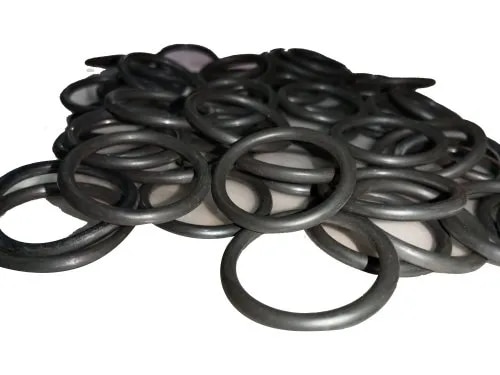
O-rings are used to seal all kinds of devices to keep them operating and safe. They do so by keeping necessary fluids in hydraulic systems and unwanted fluids and contaminants out.
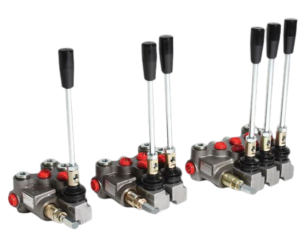
Monoblock: Have many outstanding features including high performance, high efficiency, small volume, mass flow, and leak proof. In addition, the compact direction control valves have fixed and big pull rods to control direction, providing various ports and circuit valves.
Sectional: Offers multi-function control valve method to solve hydraulic circuit system requirement. The compact construction design is one of strong features for sectional directional control valves include other features, such as low pressure drop high efficiency.
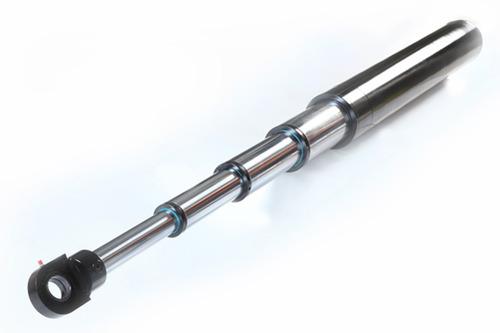
Telescopic cylinders are used when an application requires a compact retracted dimension, but needs a longer stroke. These cylinders are generally single acting and are available in two to five stages. Common mounting options for telescopic cylinders are trunnion and cross-tube.
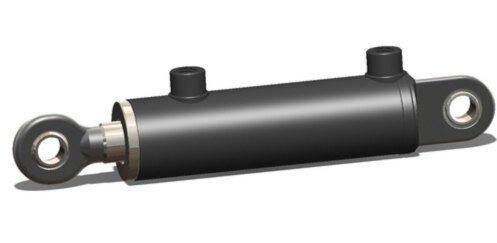
A double-acting hydraulic cylinder has a port at each end, supplied with hydraulic fluid for both the retraction and extension of the piston. A double-acting cylinder is used where an external force is not available to retract the piston or it can be used where high force is required in both directions of travel.
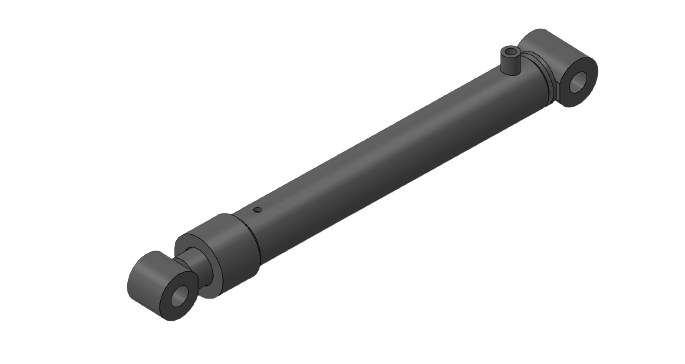
The working principle of single-acting cylinders are to transfer hydraulic fluids or an output force in one direction only. Within the cylinder, the piston rod can push outwards but cannot pull back, therefore requiring a force in the opposite direction to return the rod back to its original position.
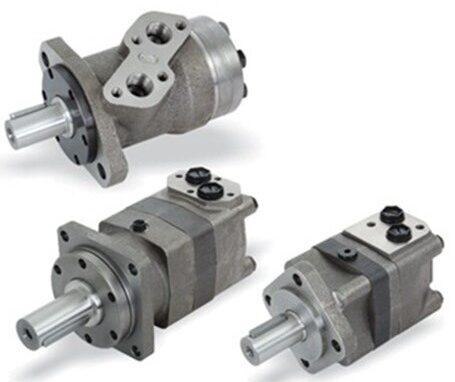
A hydraulic motor is a mechanical actuator that converts hydraulic pressure and flows into torque and angular displacement (rotation). The hydraulic motor is the rotary counterpart of the hydraulic system.
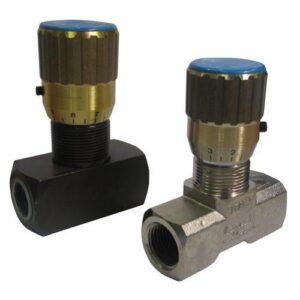
The purpose of a flow control valve is to regulate the flow rate in a specific portion of a hydraulic circuit. In hydraulic systems, they’re used to control the flow rate to motors and cylinders, thereby regulating the speed of those components.
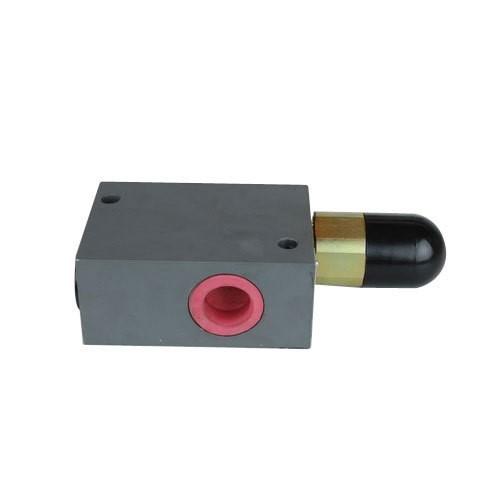
Counterbalance valves are used in hydraulic systems working with an overriding (run-away) or suspended load. They are designed to create back pressure at the return line of the actuator to prevent losing control over the load.
Hydraulic Valves
Still searching for compact hydraulic system manufacturers?
Meshines - Corporate Office, Sanganoor Road, Ganapathy, Coimbatore, Tamil Nadu, India